

Description
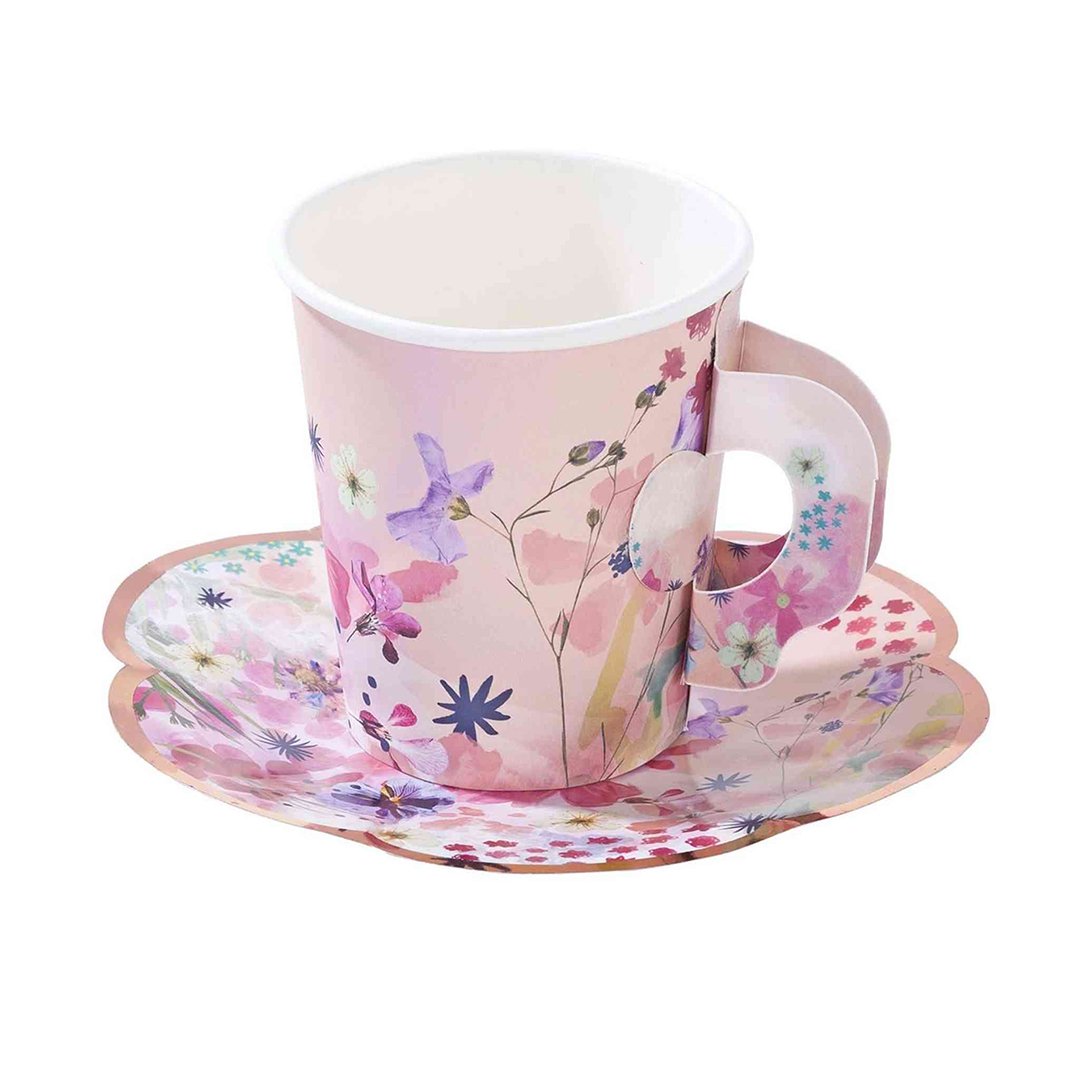
Paper Tea Cups With Handles For Elegant Service
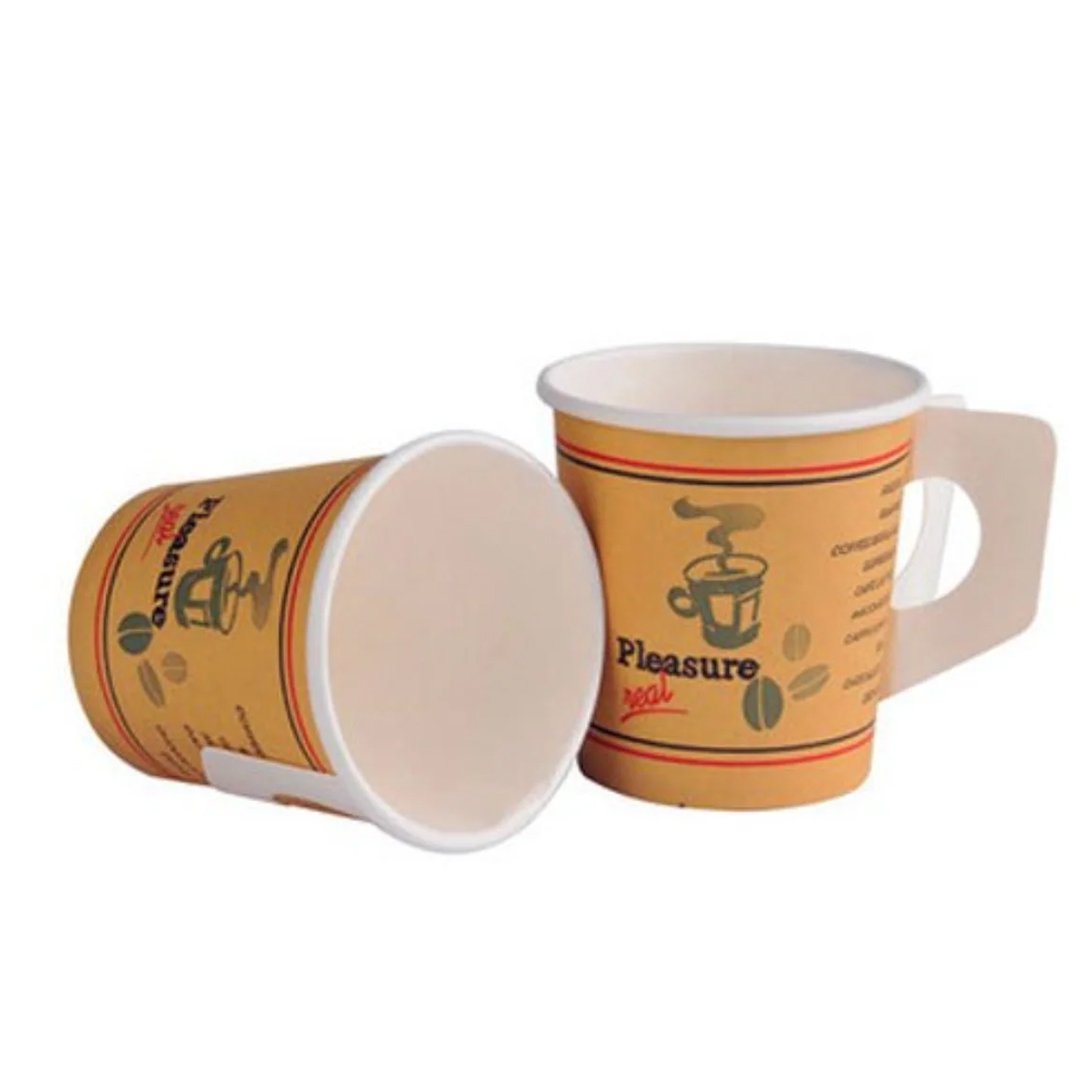
Paper tea cups with handles provide sophisticated serving solutions combining traditional aesthetics with modern disposable convenience across professional hospitality environments. These handled containers accommodate hot tea, herbal infusions, specialty blends, and warming beverages throughout hotels, cafes, event venues, and catering operations. Professional establishments rely on handled cups delivering comfortable grip while maintaining elegant presentation standards. The hot tea serving market demonstrates how handle integration enhances customer experience through improved comfort and traditional tea culture associations supporting premium positioning.
Food service businesses benefit from handled cup versatility across formal and casual tea service applications. Afternoon tea programs demand elegant presentation. Hotel room service requires comfortable handling. Catering events need sophisticated disposability. Conference centers prioritize professional appearance. Our 100-unit minimum orders make handled cup programs accessible to operations establishing quality tea service or expanding beverage menus without excessive inventory commitments.
Understanding Handle Integration Engineering
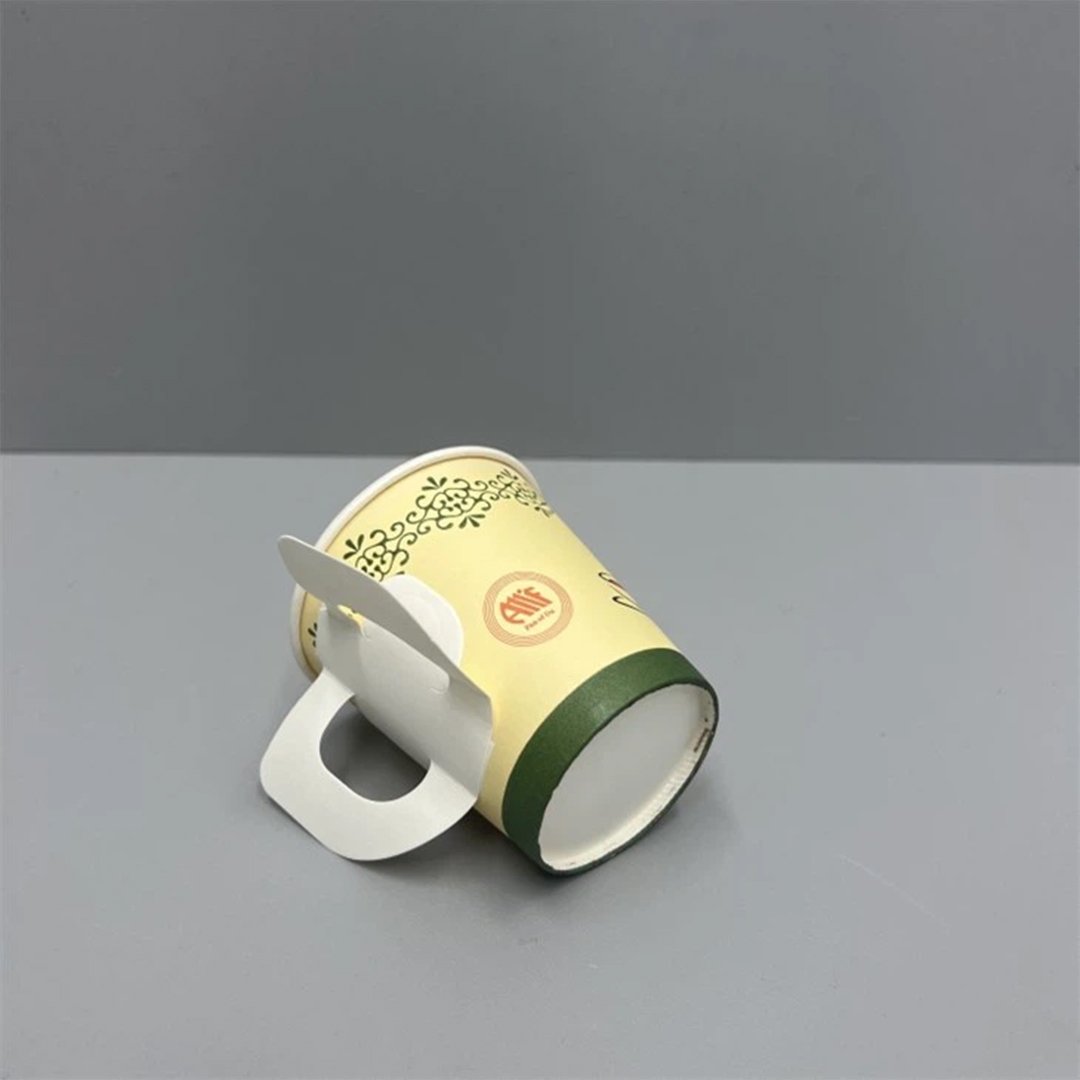
Paper tea cups with handles require sophisticated construction integrating grip features with structural integrity and thermal protection. Handle attachment methods affect durability and customer confidence. Material compatibility ensures reliable bonding under temperature stress. Engineering excellence creates functional handles supporting comfortable beverage consumption throughout service periods without structural failures affecting customer satisfaction or safety.
Customer experience depends heavily on handle performance and ergonomic comfort. Weak attachment creates anxiety during handling. Uncomfortable grip reduces enjoyment. Structural failure causes spills and burns. Proper engineering eliminates concerns through proven attachment methods and quality materials throughout professional tea service applications.
| Handle Feature | Basic Design | Standard Quality | Premium Engineering | Luxury Grade | Custom Solutions |
|---|---|---|---|---|---|
| Attachment Method | Adhesive bonded | Enhanced bonding | Mechanical + adhesive | Integrated forming | Engineered system |
| Handle Strength | Adequate | Good | Excellent | Maximum | Application-specific |
| Ergonomics | Basic | Comfortable | Optimized | Superior | Custom shaped |
| Heat Protection | Minimal | Good | Excellent | Maximum | Specialized |
| Appearance | Functional | Professional | Premium | Luxury | Signature design |
Handle Attachment Methods And Reliability
Handle attachment represents critical quality factor determining customer confidence and safety during beverage consumption. Adhesive bonding provides economical attachment. Mechanical integration creates superior strength. Combination methods optimize reliability. Manufacturing precision ensures consistent quality across production batches supporting operational dependability throughout comfortable grip cups applications where handle integrity directly impacts customer trust.
Quality attachment requires precise manufacturing control. Temperature affects adhesive performance. Pressure ensures complete bonding. Curing time influences strength development. Process excellence prevents failures affecting customer safety and brand reputation.
Attachment technology options include:
- Adhesive bonding for economical production
- Mechanical interlocking providing strength
- Heat-sealed integration ensuring durability
- Reinforced construction supporting weight
- Combination methods maximizing reliability
Ergonomic Design For Comfort In Daily Use
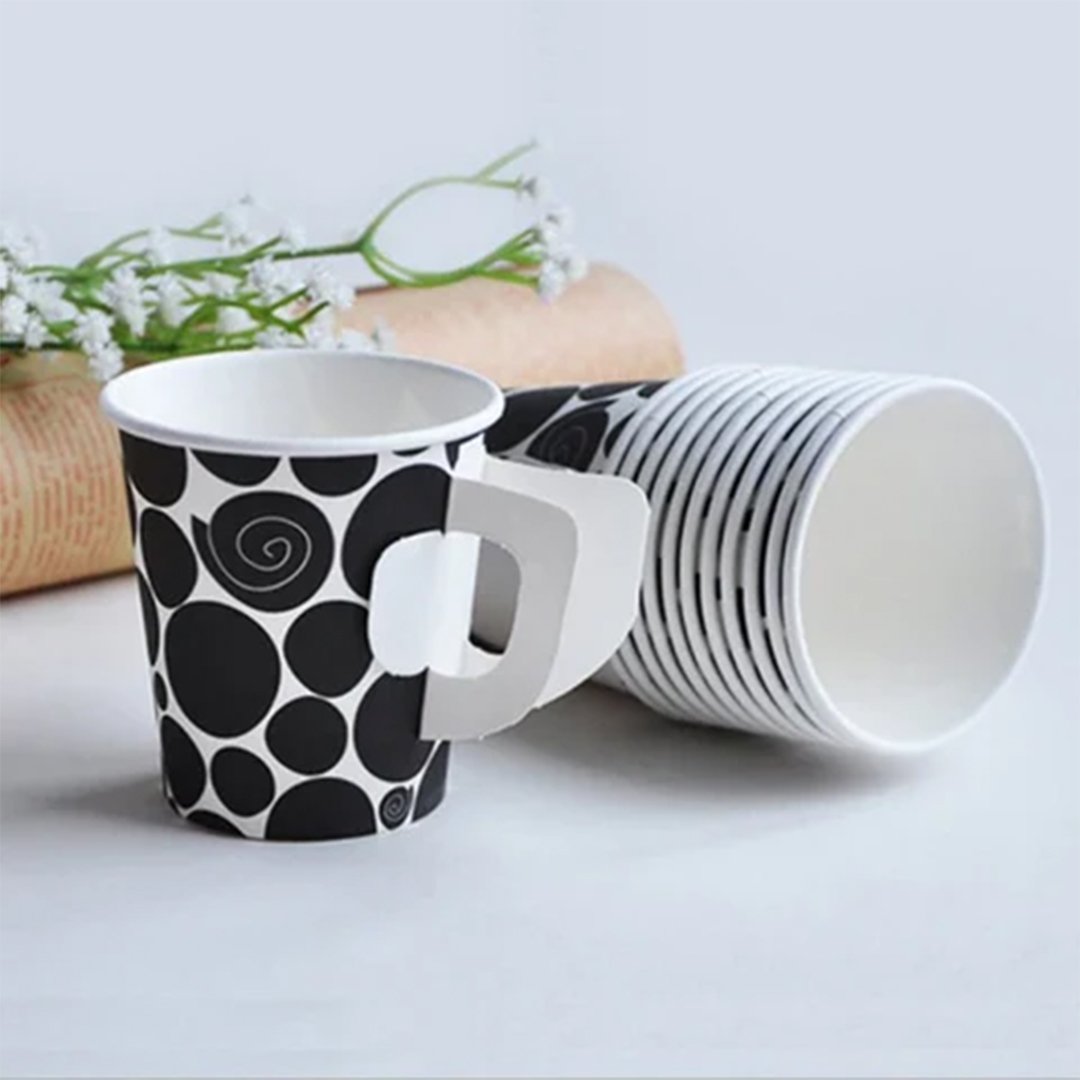
Handle shape significantly affects grip comfort and customer satisfaction during tea consumption. Finger spacing accommodates various hand sizes. Smooth surfaces prevent discomfort. Adequate clearance enables comfortable grip. Ergonomic optimization balances functional requirements with aesthetic considerations creating handles supporting pleasant beverage experiences.
Ergonomic design factors include:
- Finger opening sized for diverse hands
- Smooth contours preventing pressure points
- Adequate clearance from hot cup surface
- Balanced weight distribution during holding
- Natural grip angle reducing wrist strain
Material Construction And Performance
Paper tea cups with handles utilize quality materials balancing structural requirements, thermal protection, and aesthetic presentation. Cup paperboard ranges from 250-320 GSM depending on capacity and construction method. Handle materials coordinate with cup stock ensuring compatible bonding and appearance. Material excellence affects both functionality and perceived quality throughout professional tea service.
Material selection considers functional demands, sustainability objectives, and cost parameters. Premium tea service justifies heavier materials and sophisticated construction. High-volume operations optimize through efficient approaches. Environmental positioning guides sustainable choices. Comprehensive analysis balances multiple factors achieving optimal performance.
Cup Body Material Requirements And Strength
Quality cup materials provide structural integrity under hot liquid weight while delivering thermal comfort. Single-wall construction with handles offers basic solution. Double-wall designs provide enhanced insulation. Material weight affects both strength and thermal properties. Selection depends on service requirements and positioning strategies.
Material testing validates performance under operational conditions. Strength testing confirms capacity support. Thermal analysis measures insulation effectiveness. Coating integrity testing prevents leakage. Comprehensive validation ensures reliable service throughout hot beverage cups applications where material quality directly influences customer satisfaction.
Cup material performance characteristics include:
- Structural strength supporting liquid capacity
- Thermal resistance enabling comfortable handling
- Moisture barriers preventing liquid penetration
- Print surface quality accepting detailed graphics
- Environmental compatibility supporting sustainability
| Material Aspect | Economy Option | Standard Grade | Premium Quality | Luxury Grade | Specialty Construction |
|---|---|---|---|---|---|
| Paperboard Weight | 250-270 GSM | 280-300 GSM | 310-330 GSM | 340-360 GSM | Custom engineered |
| Wall Construction | Single-wall | Single enhanced | Double-wall | Triple-layer | Advanced system |
| Coating System | Basic PE | Standard PE | Enhanced PE | Bio-based | Specialized |
| Print Quality | Good | Very good | Excellent | Superior | Premium |
| Application | Budget service | General tea service | Premium programs | Luxury positioning | Unique needs |
Handle Material Compatibility And Safe Grip
Handle materials must coordinate with cup stock ensuring reliable bonding and consistent appearance. Matching paperboard creates seamless integration. Coated stock enables moisture resistance. Material compatibility affects both adhesive performance and visual cohesion. Coordinated selection optimizes both functional reliability and aesthetic presentation.
Handle material considerations include:
- Paperboard matching cup stock weight
- Coating compatibility enabling bonding
- Color coordination for appearance
- Flexibility balance for comfort
- Sustainability alignment supporting goals
Material innovation continues advancing handle technology. Reinforced papers increase strength. Bio-based options support environmental objectives. Enhanced formulations improve performance while maintaining sustainability commitments.
Size Range And Tea Service Applications
Paper tea cups with handles typically range from 6 to 12 ounces serving varied tea types and consumption preferences. Small formats (6-8 oz) suit concentrated teas and traditional service. Medium sizes (10 oz) handle standard servings. Large cups (12 oz) accommodate generous portions and tea lattes. Size variety ensures comprehensive menu coverage.
Different tea types and cultural traditions influence appropriate cup sizing. English breakfast tea uses 8-10 ounce cups. Espresso-sized tea concentrates need 6 ounce formats. Chai lattes require 10-12 ounce capacity. Understanding service traditions guides sizing selection matching cultural expectations and customer preferences throughout handle based designs where appropriate portioning enhances authenticity.
Traditional sizing applications include:
- 6 oz: Concentrated teas, traditional Chinese service
- 8 oz: English breakfast, standard black teas
- 10 oz: Herbal infusions, green teas, standard service
- 12 oz: Tea lattes, chai, generous servings
Size appropriateness affects perceived authenticity and customer satisfaction. Oversized cups dilute traditional aesthetics. Undersized formats frustrate customers. Cultural sensitivity in sizing demonstrates tea knowledge supporting premium positioning.
Specialty Beverage Adaptations For Custom Sizes
Modern tea programs expand beyond traditional service incorporating lattes, iced teas, and specialty preparations. Larger capacities accommodate milk additions. Extra space allows ice and ingredients. Versatile sizing supports menu innovation while maintaining handled cup benefits throughout diverse beverage applications.
Menu development benefits from flexible sizing options. Innovation opportunities expand with appropriate containers. Handled cups adapt traditional formats to contemporary beverage trends.
Specialty application requirements include:
- Tea latte capacity for milk volume
- Herbal infusion space for ingredients
- Iced tea room for ice and liquid
- Specialty blend accommodation for additions
- Generous servings matching customer expectations
Design And Branding Opportunities With Finishes
Cup circumference and height provide substantial print area supporting detailed branding and decorative elements. Traditional tea motifs create cultural associations. Modern graphics attract contemporary audiences. Pattern designs add visual interest. Strategic design transforms functional containers into brand ambassadors throughout tea cup packaging programs where sophisticated presentation elevates perceived quality.
Paper tea cups with handles provide excellent branding surfaces combining functional areas with aesthetic potential. Cup body accommodates graphics and messaging. Handle integration adds dimensional interest. Coordinated design creates sophisticated presentation distinguishing tea programs through memorable packaging.
Design optimization strategies include:
- Full-wrap graphics maximizing brand exposure
- Traditional tea imagery creating cultural connections
- Modern patterns attracting contemporary consumers
- Handle coordination integrating design elements
- Premium finishing enhancing luxury perception
Design quality directly affects brand positioning. Professional graphics suggest quality operations. Cultural authenticity resonates with tea enthusiasts. Investment in sophisticated design produces returns through enhanced perception and customer engagement.
Premium Finishing For Luxury Positioning
Specialty finishing creates distinctive appearances supporting premium tea programs. Matte coatings provide refined bases. Metallic accents suggest quality. Embossing adds tactile dimension. Combination finishes maximize visual impact. Premium presentation justifies higher pricing through perceived value.
Premium finishing options include:
- Matte coating for sophisticated appearance
- Gold/silver metallic accents suggesting luxury
- Embossed patterns creating texture
- Spot gloss highlighting specific elements
- Multiple finish combinations maximizing impact
Finishing investments justify through pricing premiums and customer appreciation. Luxury tea programs particularly benefit from premium presentation. Distinctive appearance differentiates brands in competitive markets.
| Design Element | Basic Branding | Standard Design | Premium Graphics | Luxury Presentation | Signature Identity |
|---|---|---|---|---|---|
| Print Colors | 1-2 colors | 2-3 colors | Full CMYK | CMYK + metallics | Unlimited + effects |
| Graphics | Simple logo | Logo + pattern | Detailed artwork | Sophisticated design | Custom illustration |
| Finishing | None | Basic coating | Spot effects | Multiple finishes | Signature treatments |
| Handle Design | Plain | Coordinated | Enhanced | Luxury details | Custom shaped |
| Impact | Basic recognition | Professional | Premium perception | Luxury positioning | Iconic identity |
Thermal Protection And Comfort
Handled cups provide inherent thermal advantages through grip distance from hot surfaces. Handle positioning keeps hands away from heat. Additional insulation enhances comfort. Combined protection supports pleasant consumption experiences without requiring additional accessories or precautions.
Handles create physical separation between hands and hot cup surfaces providing natural thermal protection. Distance reduces heat transfer. Air gap provides insulation. Comfortable grip enables extended holding. Natural protection represents primary handle advantage throughout tea service applications.
Thermal protection advantages include:
- Physical separation from hot surfaces
- Air gap insulation reducing heat transfer
- Comfortable extended holding capability
- Accessory elimination through integrated protection
- Customer confidence during consumption
Handle effectiveness depends on clearance dimensions and positioning. Adequate spacing ensures comfort. Proper placement optimizes grip ergonomics. Engineering excellence maximizes thermal benefits.
Enhanced Insulation Options For Safer Grip
Double-wall construction combined with handles provides maximum thermal protection. Dual layers create air gap insulation. Handle adds additional separation. Complete system delivers superior comfort. Premium construction justifies through enhanced customer experience.
Double-wall handle advantages include:
- Maximum thermal insulation capability
- Superior customer comfort during holding
- Extended temperature retention for beverage
- Premium perception supporting positioning
- Competitive differentiation through quality
Combined insulation particularly suits specialty tea programs where customer experience justifies material premiums through satisfaction and loyalty development.
Storage And Operational Efficiency
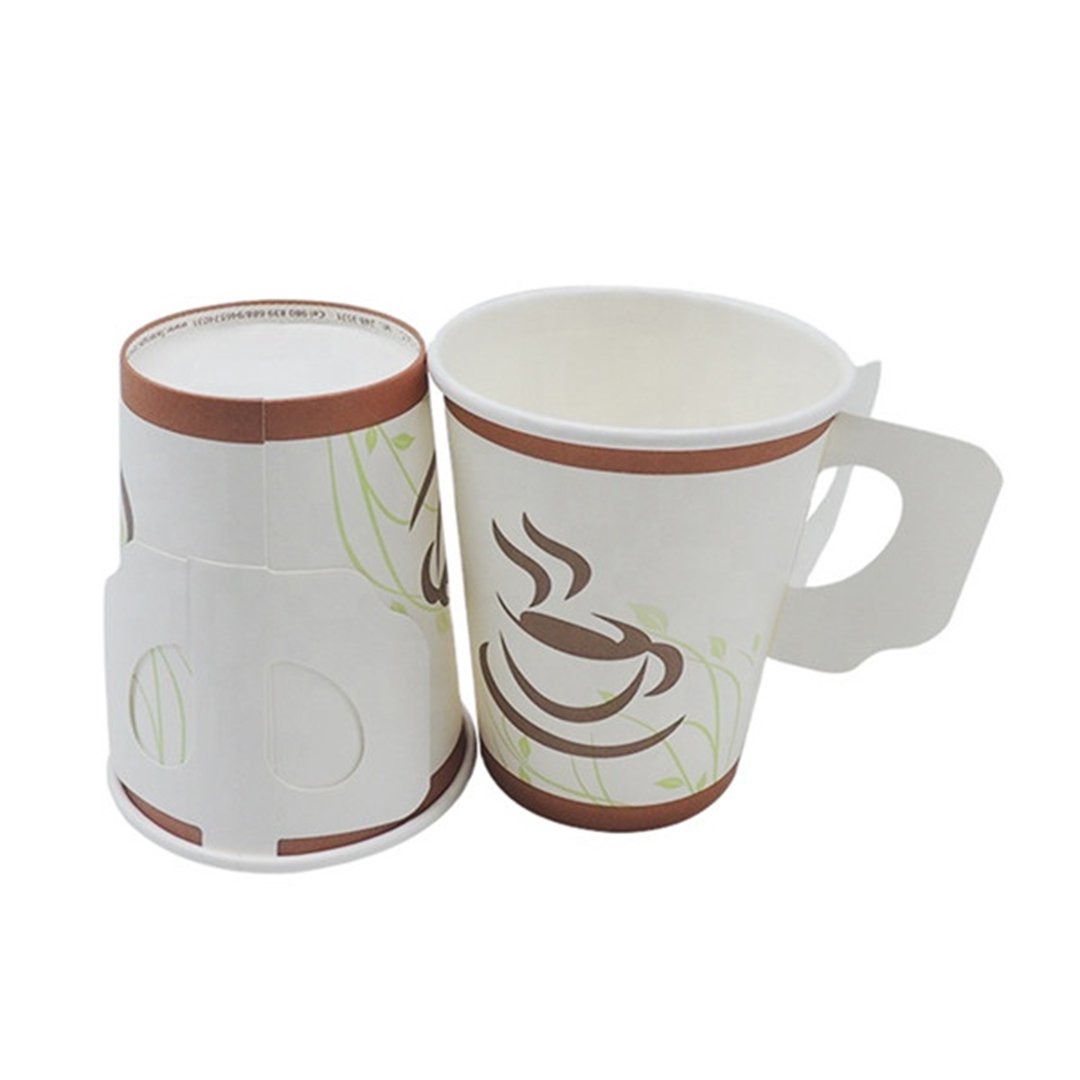
Handled cups require strategic storage accommodating protruding features. Careful stacking prevents handle damage. Organized systems enable efficient access. Proper management maintains product quality while supporting operational flow during service periods.
Handle protrusion creates storage challenges requiring protective approaches. Careful stacking prevents crushing. Adequate spacing avoids deformation. Protective packaging shields handles during transport and storage. Quality preservation ensures reliable performance.
Storage protection strategies include:
- Careful stacking with handle alignment
- Protective packaging preventing damage
- Adequate spacing avoiding compression
- Organized systems supporting access
- Regular inspection catching issues early
Storage protocols particularly matter for premium handled cups. Damage reduces perceived quality. Deformed handles disappoint customers. Systematic protection maintains product excellence.
Operational efficiency factors include:
- Staff training on proper handling techniques
- Strategic cup positioning in service areas
- Efficient pouring and serving procedures
- Quality standards maintaining consistency
- Speed optimization during rush periods
Workflow design prevents bottlenecks. Efficient procedures maintain throughput. Proper training ensures staff competency. Systematic approaches support operational excellence.